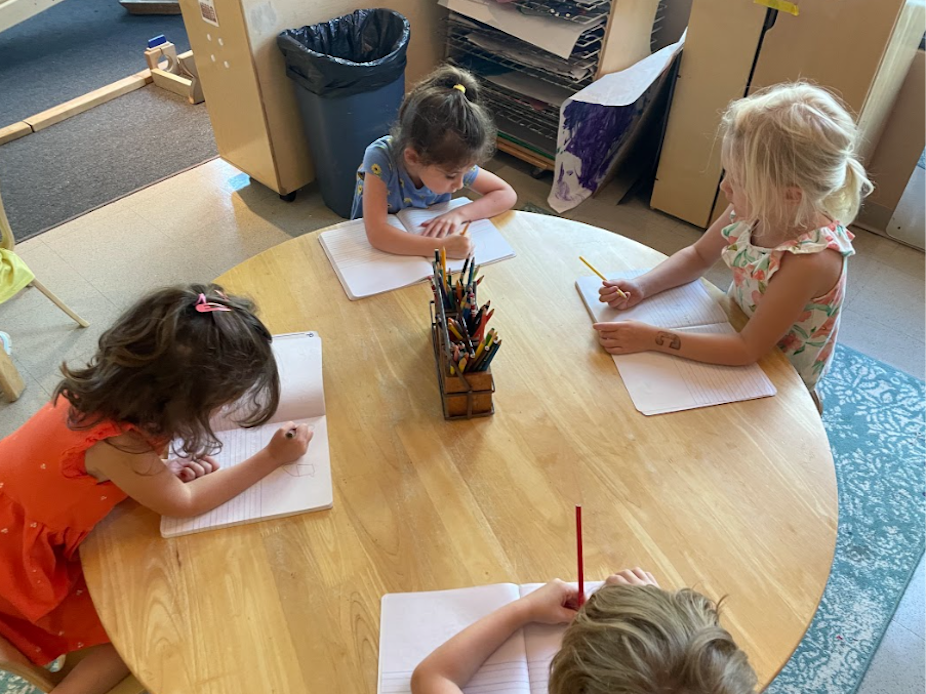
Classrooms
The N.E. Miles ECDC is a NAEYC accredited Reggio Emilia-inspired school, providing an intentional, emergent approach to educating children that is play-based and child-directed. ECDC is licensed to provide care and education for children from the college campus and community. ECDC has three classrooms devoted to children aged two – kindergarten. Each classroom is led by a master teacher or lead teacher, and lesson plans are developed using the SC Early Learning standards and SC CCR Kindergarten standards.
Seashells
Our toddler classroom serves a class size of 12 children ages 2 years to 3 years old. The staff to child ratio is 1:3 in the Seashell classroom.
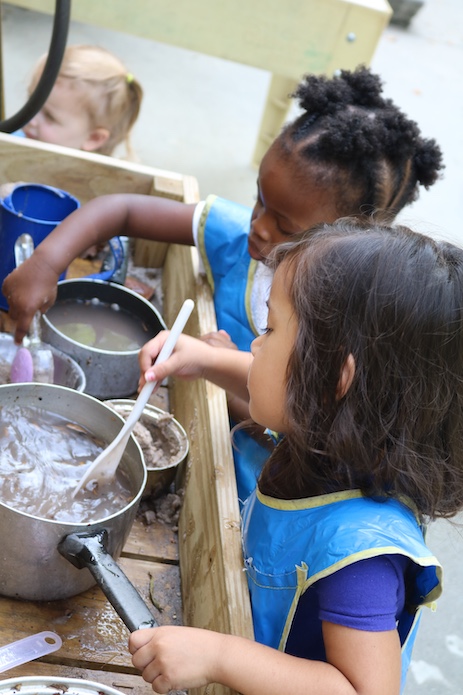
The Seashell classroom is centered around a play-based emergent curriculum where students are encouraged to socialize and explore. Centers and lessons are designed around the SC Early Childhood State Standards. In our classroom, play-based learning inspired by Reggio philosophies enables our students to build confidence and gain social skills through hands-on interactions with their environment and peers. Our focus is building those foundations of learning that include cognitive development, fine and gross motor movement, socialization, and emotional development. During our large group learning we embrace what has our students’ attention in the world around them, guiding them to explore through song, dance, rhyming, chants, and games. These moments enable them to practice using their voices in a safe space with their peers and helps build confidence. We frequently get a little dirty as we provide the materials for them to create and manipulate with their own hands using playdough, paints, mud, and other media. The classroom atmosphere is one filled with love and patience as we understand these little ones are just beginning to experience the world. We are eager to help build the foundations that will further prepare each child to become a lifelong and curious learner.
Sunflowers
Our preschool classroom serves a class size of 14–16 children ages 3 years to 4 years old. The staff to child ratio is 1:7 in the Sunflower classroom.
The Sunflower class is a nurturing and safe community where children develop skills in social emotional development, build gross and fine motor skills, and grow cognitively through a play-based, emergent-learning curriculum inspired by the Reggio Emilia philosophy. Play comes naturally to children and inspires children’s creativity and imagination, encourages language development and vocabulary, and supports children socially and emotionally by scaffolding them through social interactions. The Sunflower classroom centers, lesson plans, and assessments are designed around the SC Early Childhood State Standards. Learning in the Sunflower class is a multi-sensory experience where children are actively engaged in exploration and discovery with all 5 of their senses. The goal is for the student to explore all areas of learning in a sensory-filled experience, at their own pace.
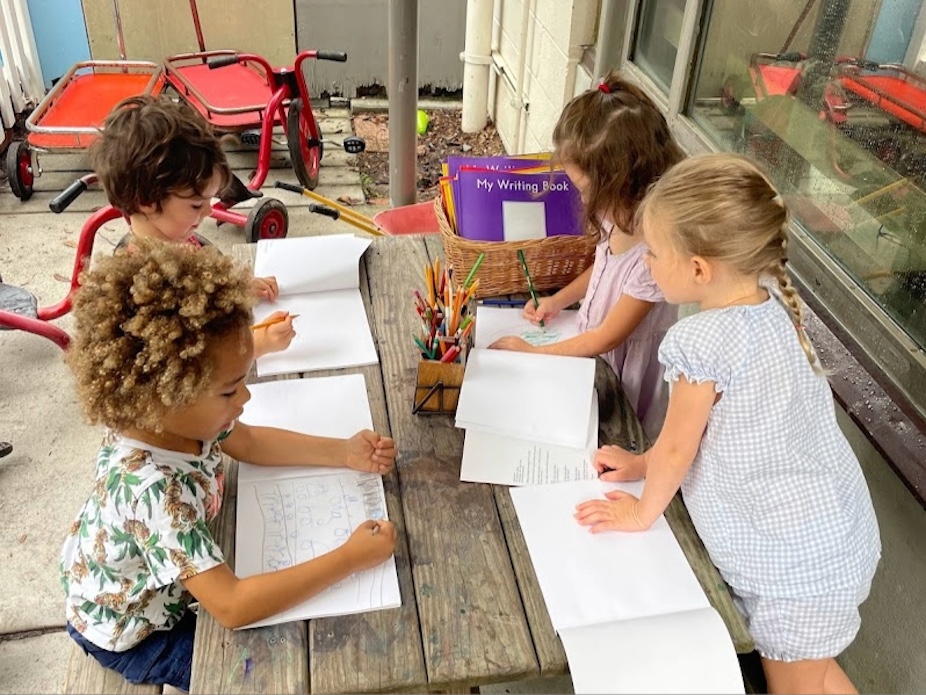
Sunflowers develop social emotional skills by practicing how to communicate their wants and needs in a safe environment. They explore emotions through role play and observing the teachers and peers modeling respect for each other. The Sunflower classroom fosters independence and responsibility by allowing the students the opportunity to participate in maintaining the classroom space and voicing their wants and needs, helping to build their own identity and sense of self. The Sunflowers class helps prepare our children for future learning by creating multiple literacy and mathematical opportunities throughout the classroom. We focus on developing fine and gross motor skills that build the foundations of early reading and writing skills. We introduce future readers to phonological awareness through rhyming and song. These practices set classroom expectations and create thoughtful citizens ready to be a part of a learning community. The Sunflower class is a busy, buzzing learning environment where our children’s growth is constantly evident in their desire to explore and learn more.
Butterflies
Our multi-aged preschool and kindergarten classroom serves a class size of 16–20 children ages 4 years to 6 years old. The staff to child ratio is 1:8.
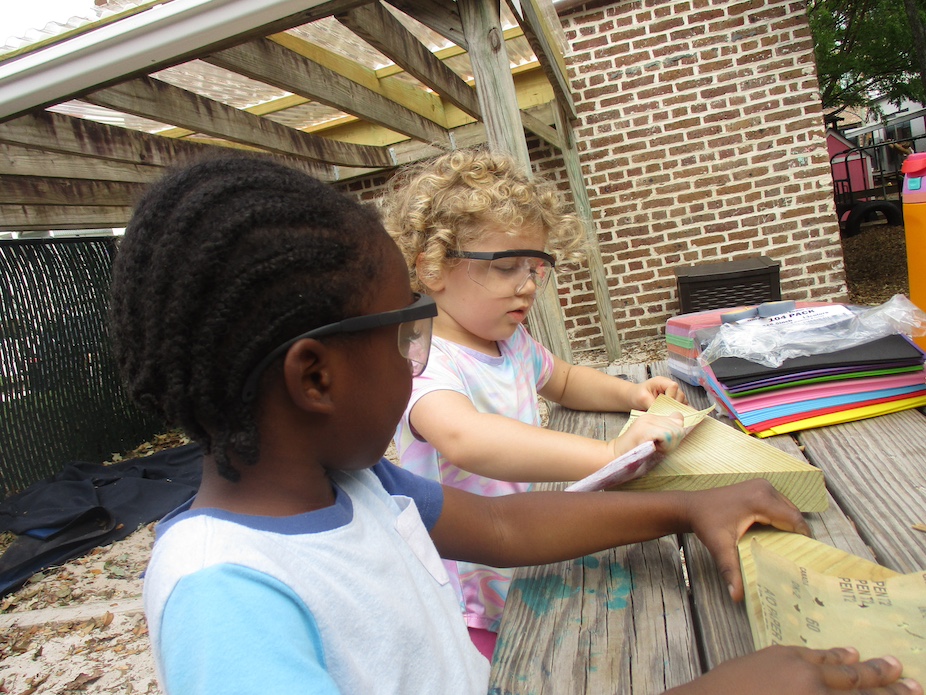
In our multi-age preschool and kindergarten classroom, we believe that children learn best when they feel safe, supported, and truly seen. Our goal is to create a warm and inclusive environment where every child feels a strong sense of belonging. We intentionally cultivate a classroom culture where students can bring their full identities in to the space, find meaningful connections with their peers, and celebrate both their similarities and differences.
Our class offers a balance of play-based, emergent learning and purposeful academic instruction. Inspired by the Reggio Emilia approach, we co-construct our curriculum with children, following their interests and ideas to develop rich project work and thoughtfully designed learning centers. We believe that art, storytelling, exploration, and imaginative play are powerful ways children make sense of the world and demonstrate their learning. We honor this learning by documenting the learning process and engaging in student driven projects.
All lesson plans are rooted in the South Carolina Early Learning Standards and College- and Career-Ready Standards, while also honoring each child’s individual pace and style of learning. We believe that resilience and perseverance are skills to be learned alongside reading and math. We target skills intentionally and consistently in a way that is engaging and developmentally appropriate to meet the learning goals of each student.
We view behavior as communication and respond with curiosity rather than correction. Our teaching supports children in developing essential life skills such as emotional regulation, frustration tolerance, mental flexibility, resilience, and collaboration. We work to scaffold executive functioning and social-emotional growth as part of daily learning, not separate from it.
Assessment in our classroom is ongoing, reflective, and used to guide responsive intervention. If a student is not meeting a learning goal, we re-evaluate and adjust our approach to support that child’s growth. We recognize that learning can be demonstrated in many ways, and we celebrate progress through play-based experiences, observation, and documentation.
Finally, we believe education is most effective when built on strong partnerships. We see families as essential collaborators and honor the deep expertise they bring about their children. Through open communication and mutual respect, we work together to support the whole child—academically, socially, and emotionally—ensuring that each learner is growing, thriving, and celebrated for exactly who they are.
Executive Functioning