Alumni Spotlight: Aurora Harris
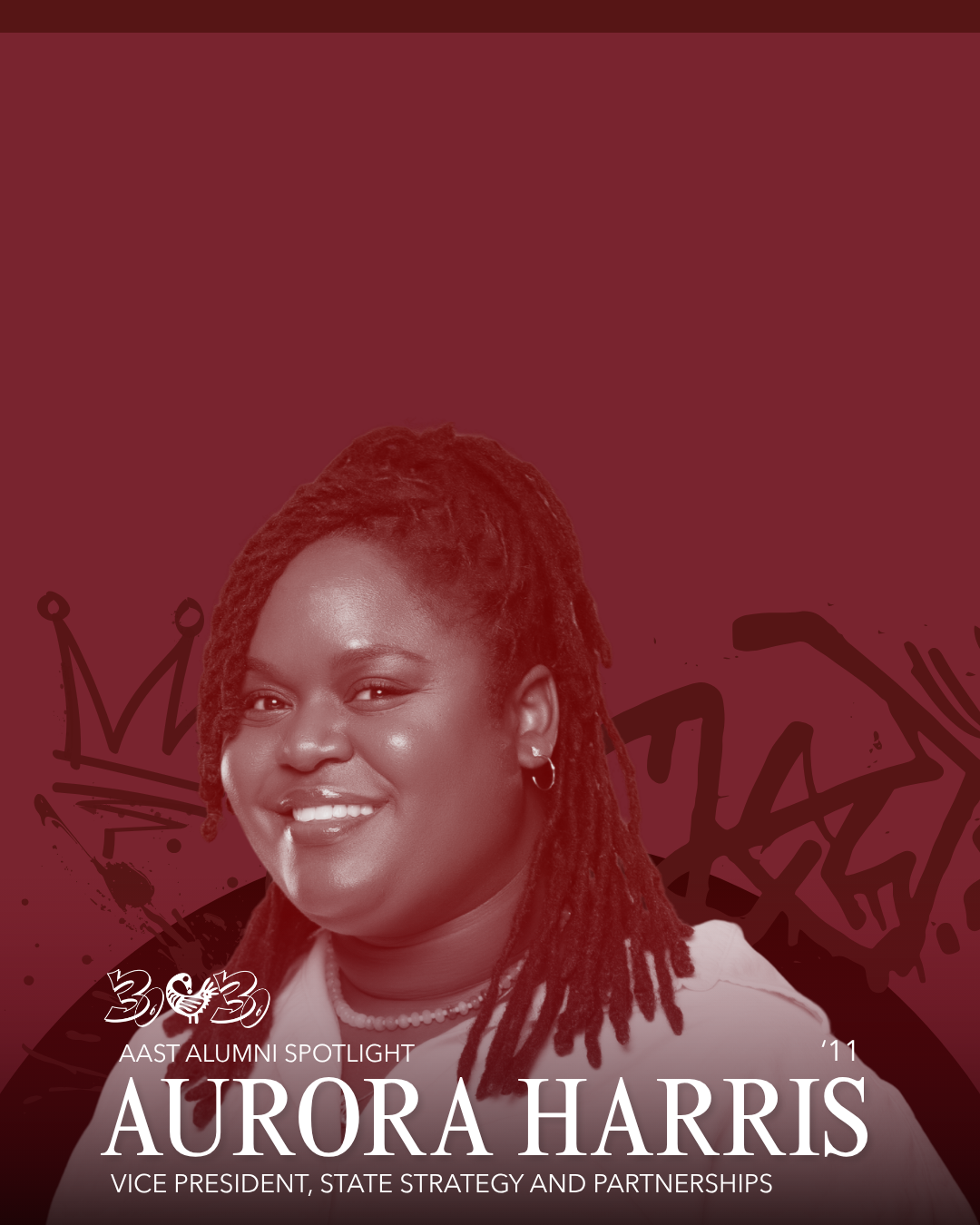
As part of our 30th Anniversary celebration, we’re shining the spotlight on our amazing alumni! We’re proud to feature Aurora, an AAST alumnus!
Aurora Harris: Connecting African American Studies to Community Organizing and Policy Change
Aurora Harris ’11 has built a career connecting history, community organizing, and public policy. A graduate of English and African American Studies, Harris carries the critical perspective she developed at the College of Charleston into work advancing health equity, LGBTQ+ rights, and young adult political power.
Based in Houston, Texas, Harris serves as Vice President of State Strategy and Partnerships at Young Invincibles, where she develops advocacy strategies across five states. Her work helps young adults organize around higher education, health care, workforce development, and civic engagement.
Harris also holds an Advanced Certificate in Organizing and Social Change from the CUNY School of Labor and Urban Studies. Across her career, African American Studies has remained central to how she understands inequity, builds partnerships, and leads.
From Historic Preservation to Community Advocacy
Harris describes African American Studies as a formative influence on both her personal development and her professional direction.
“The African American Studies Program fundamentally shaped both my personal and professional trajectory. It taught me to critically examine history, power, race, and systems of inequality.”
That perspective guided her work in Charleston, where she founded the city’s first coalition of African American preservationists and helped establish the City’s Modern Civil Rights Era Historic Marker Trail.
Those efforts connected the preservation of Black history with questions about whose experiences receive public recognition. Harris later carried that perspective into leadership roles with organizations advancing health equity, LGBTQ+ rights, and young adult political power.
Across these areas, her work reflects a continuing interest in how history shapes present-day conditions—and how communities can organize to change them.
Bringing AAST Into State Strategy and Partnerships
At Young Invincibles, Harris develops advocacy strategies across five states, helping young adults organize around issues that affect their education, health, employment, and participation in civic life.
For Harris, this work draws directly on the connections she learned to make as an African American Studies student.
“The ability to connect history, identity, policy, and community that I developed through African American Studies remains at the center of how I lead and organize,” she says.
Her approach emphasizes the lived experiences of people affected by public policy. It also asks who has access to decision-making and whose perspectives are missing.
“African American Studies taught me to ask who has been excluded from decision-making, whose stories are being told, and how history continues to shape current inequities.”
Those questions provide a framework for advocacy that considers both the policies communities encounter and the histories that helped produce them.
Three Lessons She Carries Forward
When reflecting on the skills she uses most often, Harris identifies three connected principles.
Connect history to present-day policy. Harris approaches current inequities with attention to their historical roots. Her African American Studies education taught her to examine how earlier decisions and structures continue to influence people’s opportunities and experiences.
Center the lived experiences of impacted communities. Harris emphasizes the perspectives of people directly affected by an issue. That commitment informs how she thinks about representation, participation, and whose voices shape decisions.
Organizing and narrative change work together. Harris understands systems change as requiring both community organizing and changes in how issues are understood and discussed. Alongside building collective power, she considers whose stories are being told and how those stories shape public understanding.
Together, these principles guide her work across historic preservation, advocacy, and organizational leadership.
Recognition and Community Leadership
Harris’s career has included recognition for her leadership and service in Houston, alongside an ongoing commitment to young people.
Among her accomplishments and roles are:
Vice Chair, Board of Directors, Texas Network of Youth Services
Recognized among OutSmart Magazine’s Ten Faces of Black LGBT Leadership in Houston, 2016
Recipient, Black Queer Magic Award, 2016
Member, City of Houston’s first-ever LGBTQ Advisory Board, 2016–2018
Member, City of Houston Equitable Vaccine Working Group, 2020–2021
Advanced Certificate in Organizing and Social Change, CUNY School of Labor and Urban Studies
Harris is also interested in connecting with students and the African American Studies community through networking, mentoring, providing internships, and guest speaking or facilitation, particularly around community organizing.
These opportunities offer ways to share her experience connecting community priorities with advocacy and public policy.
An Education That Prepares Students to Lead
Harris sees African American Studies as an education that develops skills students can carry into many professional settings.
“African American Studies equips students with the ability to think critically about history, power, culture, and public policy while strengthening skills in research, writing, communication, and problem-solving that are valuable in any career,” she explains.
For Harris, those skills support leadership that is attentive to people’s experiences and willing to question how systems operate.
“The program prepares you to lead with empathy, ask better questions, and create meaningful change.”
Her path—from preserving African American history in Charleston to developing advocacy strategies across five states—illustrates how that preparation can take shape. The connections among history, identity, policy, and community remain central to her work, helping her turn critical inquiry into collective action.
30 years; 30 alumni; Going Strong
Related News

Going Viral: How to Turn Creativity Into a Career

Reaching for the Stars: Inside the CofC Observatory
From CofC to NBC: Alum Represents Charleston on ‘The Traitors’