Welcome to the First-Year Experience!
Topics you’ll love. Skills you can use. Friends and mentors you won’t forget.
The College of Charleston First-Year Experience academic program provides you with a smooth transition to college life and the academic, social and cultural community at the College of Charleston.
Find a First-Year Experience to match your passions and goals, get involved, meet some new friends and build a great foundation to earning your College of Charleston degree.
FYE is not just a requirement
-
FYE Basics
Is FYE Required? All students who have completed less than one year of college when they enter the College of Charleston, must complete a First-Year Experience course, which can be worth anywhere from 3 to 8 credit hours. Successful completion of the First-Year Experience is part of the general education curriculum that is required for graduation. If you are a CofC Honors Student, then you must complete your first year experience course through the Honors College.
How do I choose a FYE that's right for me? We have three different types of FYE courses at the College of Charleston that all fulfill the FYE graduation requirement:
- The First-Year Seminar (FYSE/FYSU/FYSG) is a 3-credit hour academic course that explores special topics taught by our outstanding faculty. These are non-catalog courses, so this is the only opportunity you’ll have to take this course. First-Year Seminars are taught as smaller, discussion-style seminars. FYSEs are regular FYE seminars, FYSU/FYSGs are seminars that also satisfy a Multicultural Understanding and Global Citizenship requirement* (U=US focused and G=Global). These courses do not have prerequisites.
- The FYE Stand-Alone is a regular 3-4 credit hour catalog course (e.g., BIOL 111 or PSYC 103), but as an FYE course, it is taught with a special focus or theme that makes it unique. These are sometimes larger classes than a First-Year Seminar, but they also often satisfy Gen Ed requirements, and serve as the entry point into particular majors/minors. These courses may have prerequisites.
- A Learning Community (LC) links two academic courses (6-8 credit hours) often around a related theme or issue. All learning communities count toward other general education requirements as listed. One or both courses in a learning community may have prerequisites.
Is there anything else that is required? All three of the FYE course types listed above are also linked with a Synthesis Seminar Course (FYSS 101). This is a weekly 50-minute seminar led by a peer facilitator that helps introduce you to the College’s academic community through the perspective and advice of a successful College of Charleston student.
When do I need to complete my FYE requirement? Your FYE must be completed during your first year at the College of Charleston and students are advised to take it during their first semester.
Transfer Student? If you are a transfer student, you can be waived from the FYE requirement IF EITHER of the following apply to you: 1) You have at least 24 college credits earned after high school (AP and dual enrollment credits earned during high school do not count towards the minimum 24 credits); OR 2) You are at least 20 years old on the first day of classes in the semester you started at College of Charleston. In addition, if you completed a FYE-style course after highschool at your previous institution (e.g., IDS 109 at Trident Tech), you may also be eligible for a FYE waiver. Please reach out to fye@cofc.edu if you think any of these situations apply to you.
-
Learning Outcomes
There are a combined five learning outcomes that students are expected to meet upon completion of their FYE course. These outcomes are designed to build foundational academic skills and to introduce first-year students to the wider campus community and its many available support resources.
Some of those learning outcomes are addressed in the academic FYE course, while others are covered in the associated FYSS 101 section.
FYE Learning Outcomes:
1. Metaliterate Learning
Students will be able to access, explore, and critically assess content within scholarly, media, digital, visual, and cyber spaces according to their discipline, in both formal and informal formats (e.g., scholarly, peer-reviewed, primary literature, popular, and social user-generated, and dynamic content that circulates online, etc.); students will generate and share knowledge accurately and effectively through the production of content using appropriate formats and platforms.
2: Collaborative Learning
Students will work collaboratively and engage respectfully with their peers in the classroom; students will work collaboratively to produce content that shows a significant contribution by each group member.3: Integrative Learning
Students will use critical thinking skills and problem-solving techniques to make connections across disciplines and/or seemingly distinct topics, ideas, events, contexts, experiences, etc.
FYSS-101 Learning Outcomes:1. Campus Resources
Students will identify and use academic resources and student support services at College of Charleston including, the library, information technology, the Center for Student Learning (CSL), the Career Center, student support services, and cultural resources.2. Academic and Interpersonal Integrity
Students will demonstrate an understanding of the core values of College of Charleston and the importance of academic integrity including how to access and share information ethically and legally. -
CofC Podcast Episode on FYE
Hear from our FYE Team about what makes CofC FYE unique.
Click here to Listen
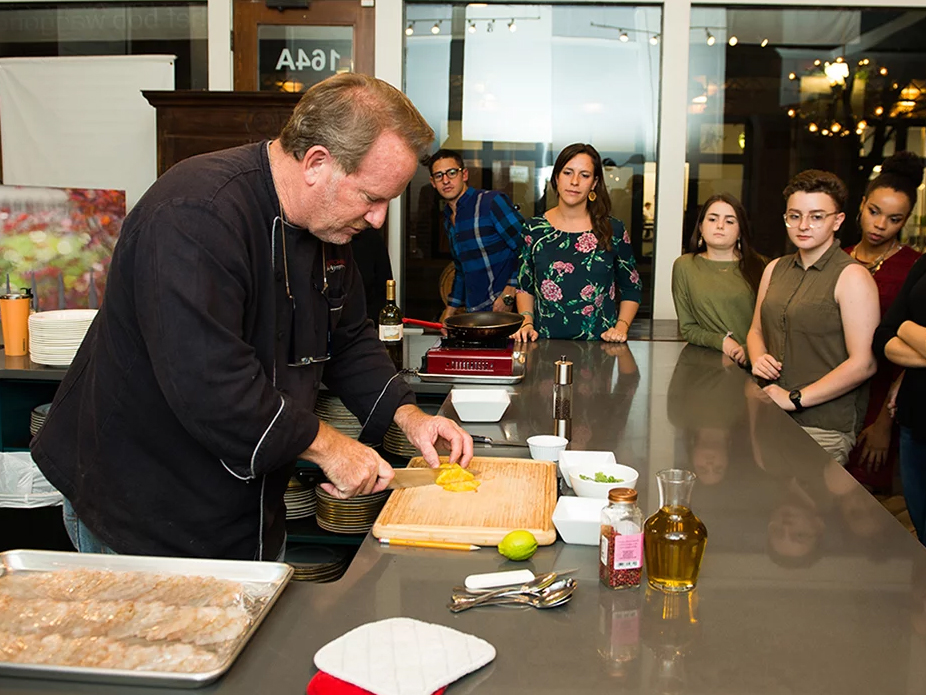

FYE: Not your basic college course
Read about the creative courses developed by FYE faculty and learn why College of Charleston's FYE has ranked as one of U.S. News and World Report's top programs.
Read More About FYE Courses