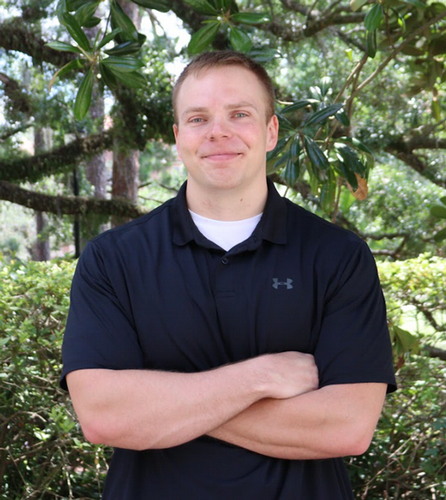
Paul Baker
Assistant Professor of Exercise Science
Education
- Ph.D. in Nutrition, Florida State University
- M.S. in Exercise Physiology, University of Kentucky
- B.S. in Exercise Science, University of Kentucky
Research Interests
My research focuses on identifying the determinants and modulators of energy balance in women during the menopause transition and beyond, including factors influencing energy expenditure, exercise metabolism, appetite, and dietary preferences, with particular emphasis on the role of female sex hormone fluctuations. I investigate targeted interventions, including resistance and endurance training, dietary strategies, and novel approaches such as normobaric hypoxia, to optimize energy regulation, body composition, metabolic health, and menopause-related symptom burden. The overarching goal of this work is to develop actionable, evidence-based strategies that improve quality of life, reduce disease risk, and inform personalized frameworks for women’s health across the lifespan.
Affiliations
- American College of Sports Medicine
- National Strength & Conditioning Association
Honors & Awards
- Southeastern American College of Sports Medicine "What’s Up Doc?" Rapid Research Competition 1st Place Awardee, 2026
- Southeastern American College of Sports Medicine "What’s Up Doc?" Rapid Research Competition 2nd Place Awardee, 2025
- Hackensmith Award - Outstanding Graduate Student, University of Kentucky, Department of Kinesiology & Health Promotion, 2017
- Hackensmith Award - Outstanding Undergraduate Student, University of Kentucky, Department of Kinesiology & Health Promotion, 2015
Courses Taught
- EXSC 333: Exercise Nutrition
- EXSC 345: Research Design & Analysis
Selected Publications
- Baker, P.A., Ladan, A.N., Joniak, K.E., Moore, S.M., Britton, M.E., Cantu, E.I., Jenkins, N.D.M., & Smith-Ryan, A.E. (2026), "Menstrual cycle influences skeletal muscle oxygenation during high-intensity interval training: a work to rest evaluation." Applied Physiology, Nutrition, and Metabolism, 51: 1-14.
- Baker, P.A., Long, A.N., Dawson, M.A., & Berryman, C.E. (2026), "An overnight, 8-hour low oxygen exposure increases resting energy expenditure but has no effect on energy intake: a randomized, single-blind, sham-controlled, crossover study." The Journal of Nutrition, 156(3), 101319.
- Baker, P.A., Moore, S.R., Delbiondo, G.M., Ilkayeva, O.R., Newgard, C.B., & Smith-Ryan, A.E. (2026), "Metabolic Effects of Isoenergetic High-Intensity Interval Training and Moderate-Intensity Continuous Training in Adults with Type I Diabetes." Medicine and Science in Sports and Exercise, 58(6), 1275–1287.
- Baker, P., Henning, P., Cheung, S., Spiering, B., Conkright, W., Smith, M., Kheterpal, I., Nindl, B., Matheny, R., Jr, & Berryman, C. (2025), "Acylcarnitine concentrations increase in response to an extended energy deficit, but return to baseline concentrations following a 2-week recovery in male US Army Rangers." Applied Physiology, Nutrition, and Metabolism, 50, 1–15.
- Baker, P.A., Clarke, H.E., Meza, C.A., Ali, M.M., & Hickner, R.C. (2025), "Creatine monohydrate supplementation and NOX impact skeletal muscle microvascular blood flow: a pilot study." Pflugers Archiv: European Journal of Physiology, 477(7), 967–976.
- Baker, P.A., Moore, S.R., & Smith-Ryan, A.E. (2025), "Physiological alterations around the menopause transition-A 2-year follow-up in PRE, PERI, and POST menopause females." Clinical Physiology and Functional Imaging, 45(3), e70011.